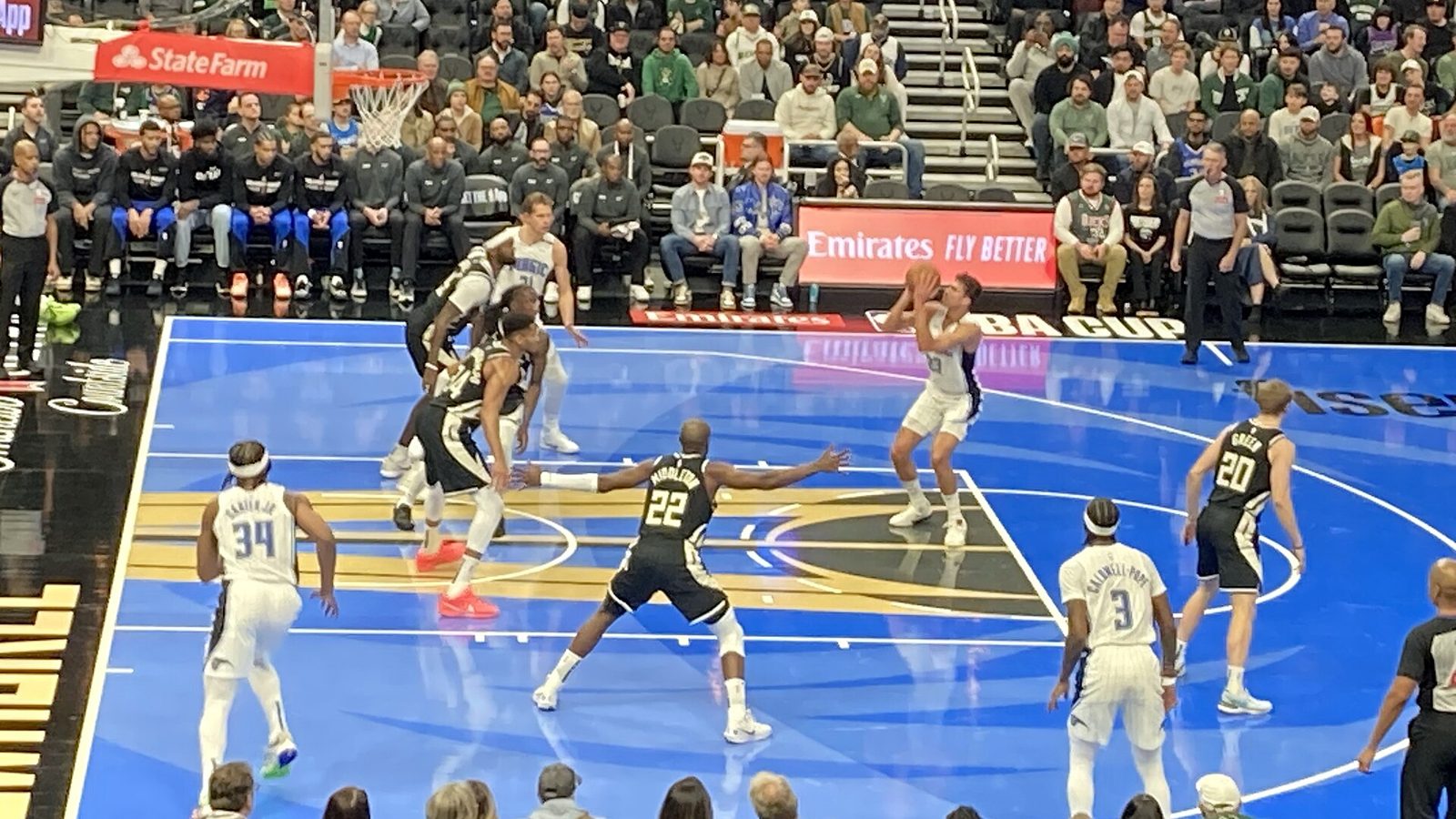

- A prop is won or lost on the player's minutes, more than on their talent.
- AI is useful for organizing data and doing the math, but only with the data you give it.
- Today Gambeta publishes only “Under” on NBA props, with injury vetoes.
Save this guide: you will use it every time you see a player line and want to check it in order.
Your progress is saved in this browser.
What is an NBA prop and how do you read it?
A prop is a bet on a player, not on the result of the game.
The bookmaker sets a line and you choose whether the player will land above or below it.
The most common are points, rebounds, assists, three-pointers and the sum of the first three.
If you want the basics of the market, first read what props are.
A typical line looks like this: “Player X, points, 24.5, over 1.90, under 1.90”.
The half point avoids a tie.
Over 24.5 wins with 25 points or more.
Under 24.5 wins with 24 points or fewer.
| Item | What it means | Example |
|---|---|---|
| Line | The number to beat | 24.5 points |
| Odds | What each side pays | 1.90 and 1.90 |
| Implied probability | What the odds “say” | 52.6% each side |
| Bookmaker margin | The amount over 100% | 5.3% |
| Fair probability | The implied one without margin | 50.0% |
The numbers in the example work out like this.
At odds of 1.90, the implied probability is 1 divided by 1.90, or 52.6%.
The two sides add up to 105.3%.
That extra 5.3% is the margin, and the fair probability of each side is 50%.
To go deeper, see implied probability and the bookmaker's margin.
Everything below with figures is a made-up example to explain the method.
It is not real data for any player or any game.
What makes a prop break?
A prop almost always loses for a reason outside the player.
These are the five that come up most.
Check them before asking an AI anything.
| Risk | Why it matters | How you see it |
|---|---|---|
| Minutes | Less time, fewer chances | Average over the last 10 games |
| Injuries | Without a teammate, the split changes | The day's injury report |
| Pace | More possessions, more stats | Game total points |
| Rest | The second night in a row lowers performance | Days since the last game |
| Lopsided game | Starters come out early | Difference in the game line |
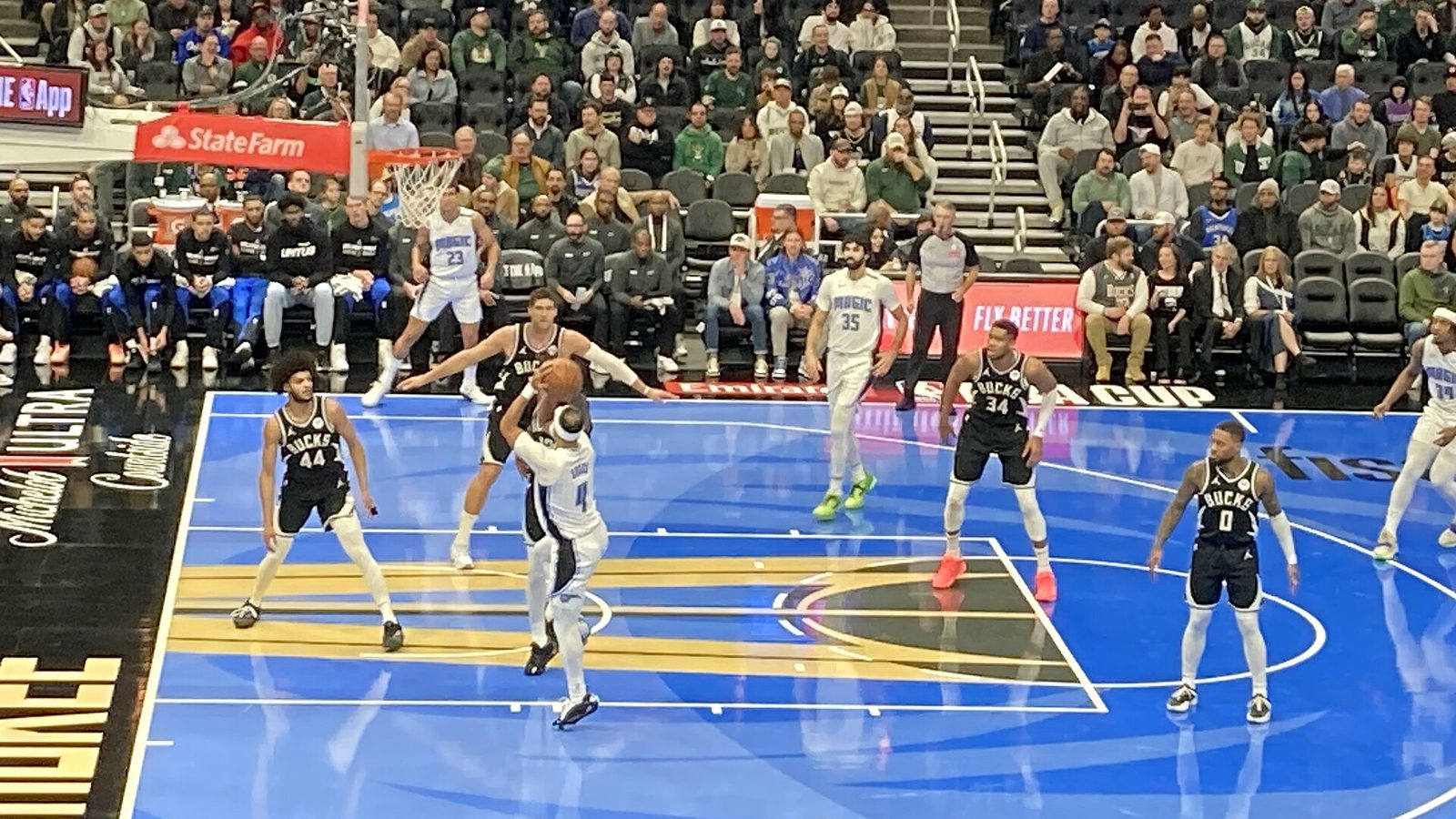

Minutes: the number that rules
Almost every statistic looks like “output per minute” times “minutes”.
If a player scores 0.8 points per minute, the projection depends on how much they play.
See how the result changes across three scenarios.
| Scenario (example) | Minutes | Expected points | Against the 25.5 line |
|---|---|---|---|
| Close game | 34 | 27.2 | Over |
| Lopsided game | 28 | 22.4 | Under |
| Heavy workload | 38 | 30.4 | Over |
With the same player and the same line, the forecast flips sides.
That is why the question is not “how much will they score?”.
The question is “how many minutes will they play?”.
A game that is decided early usually leaves the starters on the bench.
That is called a blowout.
If the favorite is very big, the “Over” loses strength and the “Under” gains.
Injuries, pace and rest: the player's context
When an important teammate is missing, the others usually get more of the ball.
But not always.
Sometimes the opponent adjusts or the coach splits the minutes differently.
Check that same day's injury report, not yesterday's.
Pace is the number of possessions per game.
Two fast teams produce more shots and more rebounds for everyone.
A slow game does the opposite.
Rest also counts: read what happens in a back-to-back.
- Injury report: look for who is out, doubtful or probable.
- Role: does their function change if someone is missing?
- Game total: a high total usually helps the “Over”.
- Schedule: each team's days of rest.
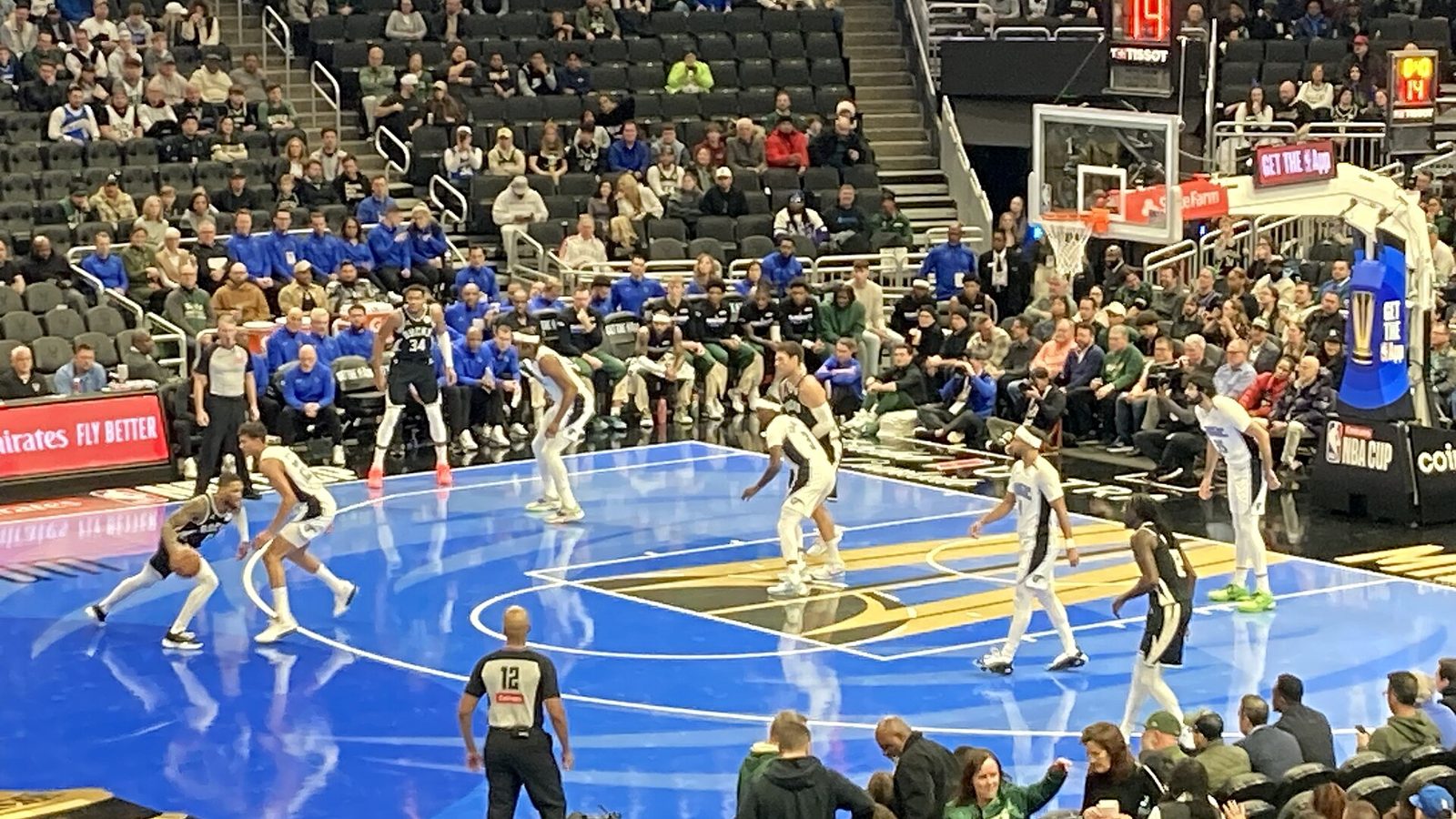

How to evaluate a prop in 6 steps
A numerical example: is there value or not?
This is an example, with made-up numbers.
Line of 24.5 points, over at 1.90.
The player cleared the line in 6 of their last 10 games, that is 60%.
Ten games are few.
A prudent approach is to blend the player's own frequency with the market.
The market's fair probability is 50%.
With a sample of 10, we give the sample a weight of 10 divided by 22, which is 45%.
It is the same idea Gambeta uses in its props model.
| Step (example) | Calculation | Result |
|---|---|---|
| Own frequency | 6 of 10 | 60% |
| Sample weight | 10 / (10 + 12) | 45.5% |
| Blended probability | 0.455 × 60% + 0.545 × 50% | 54.5% |
| Implied probability | 1 / 1.90 | 52.6% |
The blend gives 54.5% against the odds' 52.6%.
It is a small edge, under two points.
With such a low expected value, a single new piece of data erases it.
If the player shows up as doubtful, the edge disappears.
A positive expected value on paper is not guaranteed money.
In a single bet anything can happen.
See how many bets you need to draw conclusions.
The prompt to evaluate an NBA prop
Copy this text and fill in the brackets with your own data.
The more precise you are, the less the AI will make up.
Act as a basketball props analyst. Evaluate this bet: [PLAYER] [STAT] [OVER/UNDER] [LINE] at odds [ODDS].
Data I am giving you: last 10 games (stat and minutes): [DATA]. Injuries on their team today: [INJURIES]. Game total: [TOTAL]. Days of rest for each team: [REST].
Do this: 1) project the expected minutes, 2) calculate the per-minute statistic, 3) estimate the probability of clearing the line, 4) compare it with the implied probability of the odds, 5) list the risks.
Show me every calculation. If you are missing a piece of data, write “I don’t know” and do not make it up. Do not tell me it is a safe bet.
If you do not know how to build prompts with parameters, use the prompt builder.
And if you want an AI with your fixed rules, read how to create and train your own AI.
What Gambeta does with NBA props
Gambeta does not use a chat for this.
It has its own model that pulls injuries and each player's games from ESPN every few hours.
With that it builds a projection and compares it with the price at several bookmakers.
What follows is what it does today, with no promises of performance.
- Projection: average of recent games, giving more weight to the most recent and less to last season.
- Starters only: players with high, stable minutes who played in their team's last game.
- Injuries: a player on the injury list is out, unless listed as probable.
- No fresh data: if there are no recent injury reports, there are no props.
- Today only “Under”: the “Over” is pending.
- Fair price: it is compared with the margin-free consensus of several bookmakers.
Each pick is recorded before the game and can be seen in the public record.
The daily analysis is in the Betting Journal.
If you want to see the whole market, read NBA predictions with AI and how to bet on the NBA.
The limits of an AI with props
- It does not see live odds unless you paste them in.
- It does not know who is injured today without a search with sources.
- It does not know the coach's plan for that night.
- It does not take responsibility for your bankroll or your losses.
- It can mix up players with the same last name.
AI is a good helper for organizing.
The decision and the risk remain yours.
To choose which AI to use, see the comparison of AIs for betting.
What to read next
If rest interests you, continue with the back-to-back in the NBA and with fatigue and schedule.
For other sports, see NFL and MLB props with AI.
To keep control, build your betting tracking spreadsheet.
And return to the AI for betting pillar guide whenever you want the full picture.
For adults 18 and over only.
Bet only money you can afford to lose.
If gambling stops being entertainment, read about betting responsibly.
Frequently asked questions
What is an NBA player prop?
It is a bet on an individual statistic.
For example, points, rebounds, assists, three-pointers or a sum of several.
You choose over or under a line set by the bookmaker.
It does not matter who wins the game, only the player matters.
Can an AI predict how many points a player will score?
Not with certainty.
It can estimate a probability if you give it recent data, minutes and context.
Without data, the AI fills in with figures that sound good but may be false.
Always verify what it returns.
Why do minutes matter so much?
Because almost every statistic grows with time on the court.
A player with fewer minutes has fewer chances to reach the line.
A lopsided game tends to cut starters' minutes.
It is the first number to look at.
Which is better, the “Over” or the “Under”?
Neither is better by definition.
It depends on whether the line reflects the context well.
Gambeta today publishes only “Under” on NBA props, because that is where the veto for injuries and minutes is clearer.
It is not a guarantee, it is a design decision.
How many games do you need to trust an average?
The more the better, but carefully.
Ten games are a small, very noisy sample.
That is why it is wise to blend the player's average with what the market says.
Never trust a streak of three or four games.
Does Gambeta use a chat AI for its props?
No.
The props come from our own model with injury data and each player's game logs.
Each pick is recorded before the game and can be reviewed in the public record.
We use chat AIs to explain and organize ideas.