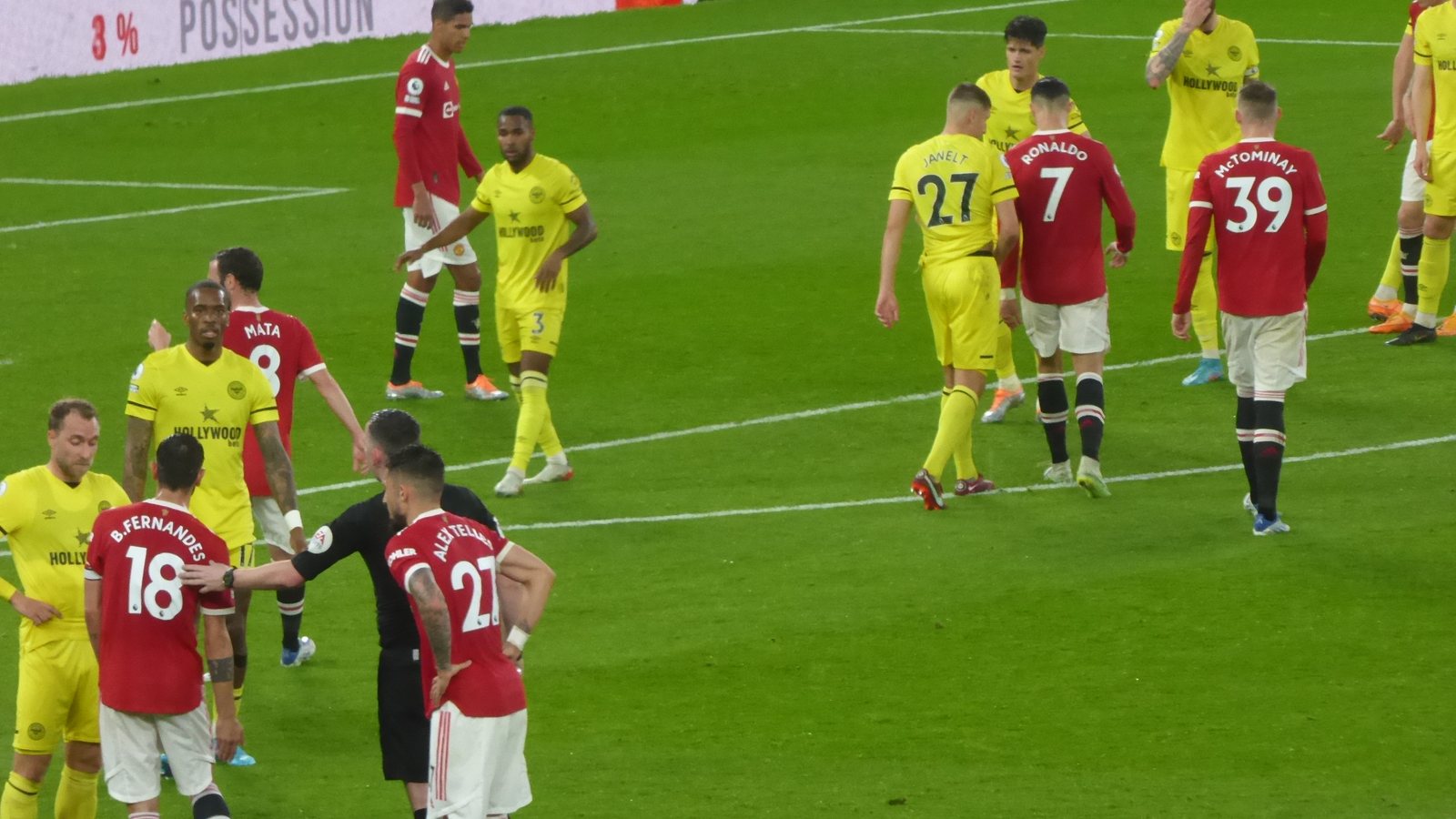
- Each prompt asks a single question: minutes, shots, penalties, odds and checklist.
- In this market the AI mixes up players and blends seasons: write the name, club and season in every prompt.
- A prompt organizes your goalscorer analysis, it does not know today’s lineup and it does not guarantee a goal.
Save this article: the next time you look at goalscorer odds, come back, copy the prompt you need and pick up where you left off.
Your progress is saved in this browser.
Which prompts work for goalscorer betting?
The goalscorer market depends on a single player, not on the team.
What matters is how many minutes he plays, how much he shoots and whether he takes the penalties.
If you ask an AI “tell me who scores a goal”, the answer is a guess.
That is why this article splits the analysis into five prompts.
Each one asks a single question.
You put the answers together and draw your own conclusions.
All the prompts use parameters in [BRACKETS].
Replace each one with your own data before you paste.
If you leave a bracket unfilled, the AI fills it with whatever comes to mind.
A risk specific to this market: the AI mixes up players.
It blends seasons, adds goals from a previous club and does not know today’s lineup.
In every prompt we ask for the season, club and source, and for it to write “I don’t know” when it cannot verify.
The goalscorer is a prop: a bet on what a player does, not on the result.
If the term is new to you, start with what props are.
And if you are looking for a prompt for another market, there is the index of ChatGPT prompts for every betting market.
Before you paste: three rules so the AI does not mix up the player
- Turn on web search: without it, the AI does not have this season’s data.
- Write the full name, club and season: that lowers the risk of it mixing players or stages of a career.
- Paste the odds yourself: you see them at your bookmaker, the AI does not.
Features change: check in the app what your plan includes.
No AI bets for you or knows the result.
All of them can make up data.
Prompt 1: the player’s minutes and expected starting role
This is the starter prompt.
A player who comes off the bench has less time to score.
Before looking at his goals, you have to know how much he plays.
Analyze the situation of [PLAYER], of [CLUB], for the match against [OPPONENT] on [DATE] in [COMPETITION].
Give me: matches played in [SEASON], how many as a starter, total minutes and minutes per match.
Tell me in how many of the last [N] matches he started and in how many he was substituted before the end.
Add whether he has an injury, a suspension or likely rotation, and how many days have passed since his last match.
Use only [SEASON] data with [CLUB] and cite the source of each number.
Do not guess the lineup: tell me whether it is confirmed or not.
If you cannot verify a piece of data, write “I don’t know”.
What it returns
A usage sheet for the player: starts, minutes and substitutions.
Also a warning about injury, suspension or rotation.
It is the base for the other four prompts.
How to verify it
Check the minutes on a statistics site, with the right club and season.
The official lineup is published shortly before the match: until then, nothing is confirmed.
If the AI gives a formation with no source and no date, discard it.
For last-minute news, an AI that reads recent posts is useful: see how to bet with Grok to follow absences and lineups.
If the team plays every few days, rotation weighs more.
That topic has its own article: fatigue and fixture congestion in betting.
Prompt 2: shots, shots on target and expected goals per 90 minutes
A player’s goals go up and down in streaks.
Shots and expected goals are more stable.
Asking for them per 90 minutes lets you compare a starter with a substitute.
For [PLAYER], of [CLUB], in [COMPETITION] during [SEASON], give me per 90 minutes: shots, shots on target, goals and expected goals (xG).
Separate penalty goals from the rest and also give me the non-penalty xG.
State the total minutes on which each average is calculated.
Do not add data from another club, from the national team or from another season.
Cite the source of each number and write “I don’t know” if you do not have it.
What it returns
Four averages per 90 minutes and the number of minutes behind each one.
With penalties separated, you see how much the player produces in open play.
If you do not know the metric, it is explained in what xG is in football.
How to verify it
Open the source and check that the club and the season are the ones you asked for.
Look at the minutes: with fewer than ten full matches, the average says little.
If the goals in the answer match the player’s entire career, the AI mixed up stages.
An example to understand the scale, with a simplified calculation.
A player with 0.45 expected goals per 90 minutes would score at least one goal in about 36.2% of full matches.
If he plays 70 minutes, that estimate drops to about 29.5%.
The calculation is 1 − e^(−expected goals), a common approximation for rare events.
That is why prompt 1 goes first: the minutes move the whole calculation.

Prompt 3: who takes the penalties and the free kicks
The penalty taker has an extra route to score.
That piece of data changes how you read the odds.
It is also one of the ones the AI answers worst, because the taker changes without notice.
At [CLUB], during [SEASON], who took the penalties and the direct free kicks?
List every penalty for the team in [COMPETITION]: date, opponent, who took it and whether it was a goal.
Tell me whether [PLAYER] is the first taker, the second or does not take them.
Clarify whether there was a change of taker in recent rounds.
Cite the source and write “I don’t know” if you cannot confirm it.
What it returns
A list of penalties with date and taker.
With that list you see whether the player takes them always, sometimes or never.
An answer without dates is no use.
How to verify it
Pick two penalties from the list and look up the reports on those matches.
If the taker does not match, discard the whole answer.
And do not count on the penalty: there are few per season and nobody knows in which match they will come.
Prompt 4: the “anytime goalscorer” odds against his scoring frequency
This prompt compares what the market offers with what the player has done.
It needs you to pass it the odds and the data you have already verified.
It does not look for a bet, it looks for the distance between the odds and the frequency.
The “anytime goalscorer” odds for [PLAYER] in [HOME TEAM] vs [AWAY TEAM] are [ODDS].
Calculate the implied probability of those odds, step by step.
With this data that I have already verified, [PASTE MINUTES, SHOTS AND xG FROM PROMPTS 1 AND 2], tell me in how many of his last [N] matches with [CLUB] he scored at least one goal.
Compare that frequency with the implied probability.
Mark which part of your answer is calculation and which part is opinion.
Do not tell me whether it is worth betting.
What it returns
The implied probability of the odds and the frequency with which the player scored.
They are two percentages that can be put side by side.
If you do not know how to read the first one, review the implied probability.
How to verify it
Redo the calculation with the odds converter and the expected value calculator.
Count by hand the matches with a goal, and check how many minutes he played in each.
If your calculation and the AI’s do not match, yours is the one that counts.
| Odds (example) | Implied prob. | Matches with a goal | Reading |
|---|---|---|---|
| 2.50 | 40.0% | 9 of 20 (45%) | Gap in favor |
| 3.00 | 33.3% | 7 of 21 (33.3%) | No gap |
| 2.00 | 50.0% | 8 of 20 (40%) | Gap against |
The numbers in the table are an example to show the calculation.
Twenty matches are a small sample, and the odds already include the bookmaker’s margin.
A gap in favor on paper can be just noise.
Read the market rules at your bookmaker before you bet.
What happens if the player does not come on, or comes on in the second half, depends on each bookmaker.
Own goals do not usually count for this market.
Prompt 5: the checklist before betting on a goalscorer
This is the closing prompt.
It does not analyze the player: it reviews your analysis.
You ask it to look for gaps before you put money down.
This is my goalscorer market analysis for [PLAYER] in [HOME TEAM] vs [AWAY TEAM] on [DATE]: [PASTE YOUR DATA AND CONCLUSIONS].
Act as a critical reviewer.
Tell me: 1) whether any piece of data may belong to another player, another club or another season, 2) whether his starting role is confirmed or an assumption, 3) whether the sample of matches is small and 4) what bias I may have.
Do not give me a betting verdict.
Just flag risks.
What it returns
A list of gaps and risks.
The most frequent one is betting on a well-known name without looking at his minutes.
If the list is long, maybe the best thing is not to bet.
How to verify it
Tick off each risk you resolved.
The starting role is only resolved with the official lineup.
A good analysis can also end in not betting.
How to use the 5 prompts in order: step by step
What are the most common mistakes with these prompts?
- Writing only the surname: the AI may bring the data of another player.
- Accepting “season” goals without checking that they do not include the previous club or the national team.
- Taking a “probable” lineup as confirmed.
- Looking at total goals and not at the minutes it took to score them.
- Counting on a penalty that may not come, or that another teammate takes today.
The prompts help you think in an orderly way.
They do not replace a data source or a record of results.
A well-written answer is not a true answer.
Do these prompts work for props in other sports?
The logic is the same: minutes, volume and odds.
The data and the names of each market change.
For basketball, the route is in NBA props with AI.
What Gambeta does with these markets, no promises
Gambeta publishes predictions with its own model.
Each one is recorded with its odds before the match.
You can review it afterwards in the public record, win or lose.
If you want to see how it works, go to the guide to AI for betting, with free predictions from Gambeta’s AI every day.
A prediction is not a promise.
No goalscorer bet is safe.
For adults 18 and over only.
Bet only money you can afford to lose, set a limit before you start and stop if you stop enjoying it.
More at responsible betting.
What to read next
If the player you are looking at plays for a team that attacks a lot, the next step is the goals of the match.
They are in goals betting prompts and in both teams to score prompts.
The other statistics markets have their own articles: 5 prompts for corner betting and 5 prompts for yellow card betting.
If you are watching the match, add the live betting prompts.
And if you want a prompt of your own, build it with the prompt builder.
Frequently asked questions
Which prompt should I use for goalscorer betting?
Start with the one on minutes and starting role.
If the player does not start or plays little, the rest of the analysis loses value.
Then add the shots per 90 minutes prompt, the penalties one and the odds one.
Does ChatGPT know who will start today?
No.
The official lineup is published shortly before the match, and the AI may repeat an old formation.
Ask it to say whether the lineup is confirmed and check it at an official source.
Why does the AI mix up players?
Because there are similar names and players who changed clubs.
It also adds up goals from several seasons as if they were from one.
Write the full name, club and season in every prompt, and check that the answer respects them.
What do the “anytime goalscorer” odds mean?
They are the odds that a player scores at least one goal during the match.
Their implied probability is calculated as 1 divided by the odds.
Odds of 2.50 equal 40%, before removing the bookmaker’s margin.
Are expected goals useful for this market?
Yes, as a reference.
Expected goals per 90 minutes measure the quality of the chances a player gets.
They are more stable than actual goals, but they need many minutes to be reliable.
Does a good prompt guarantee I will get the goalscorer right?
No.
A goal is a rare event, and even the best striker goes many matches without scoring.
A prompt organizes the data, but betting always carries the risk of losing money.