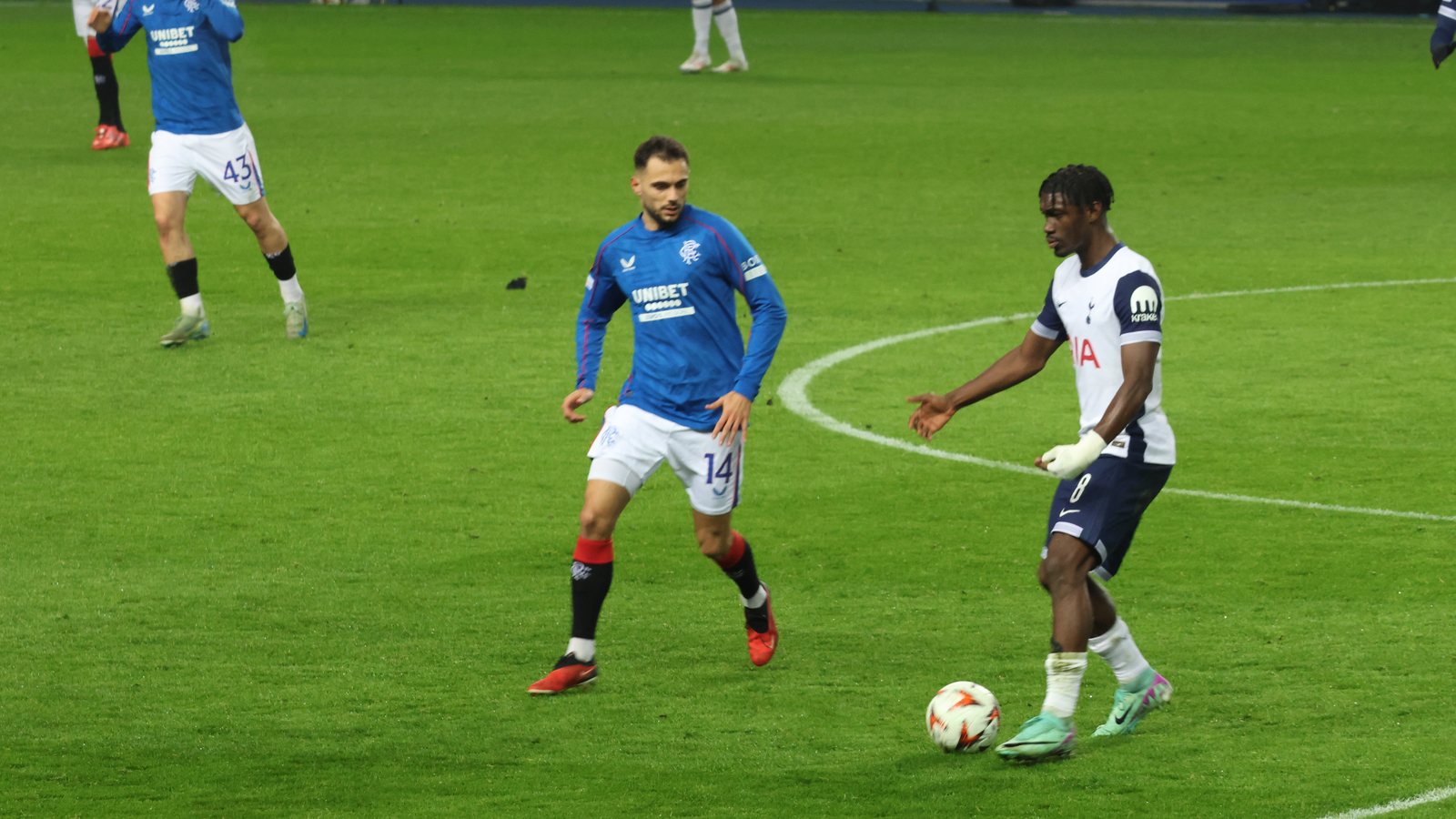
- A chat AI does not watch the match and answers with a delay: you paste the data yourself.
- Two of the five prompts are used before kick-off: the plan and the stop on losses.
- Live is the most impulsive format: if you do not have a written limit, do not bet live.
Save this article: before the next match you want to follow live, come back, build the plan and the stop, and have the other prompts ready.
Your progress is saved in this browser.
Is a chatbot useful for live betting?
It is useful for one thing only: organizing your decisions.
A chatbot does not watch the match.
It does not have reliable real-time data either, and it answers with a delay.
By the time it finishes writing, the odds have already changed.
That is why the five prompts in this article work with data you paste.
They are the minute, the score, shots, possession, corners, cards and the current odds.
The AI does calculations and looks for gaps in your plan, nothing more.
Live is the most impulsive betting format.
The odds change every few seconds and push you to decide fast and chase losses.
If you have ever bet more to win back what you lost, do not bet live.
For adults 18 and over only.
All the prompts use parameters in [BRACKETS].
Replace each one with your own data before you paste.
If you leave a bracket unfilled, the AI fills it with whatever comes to mind.
If the format is new to you, start with what live bets are and the guide to live sports betting.
And if you are looking for a prompt for another market, there is the index of ChatGPT prompts for every betting market.
Before you paste: three rules for using the AI while the match is on
- Have the prompts ready before the match: with the ball in play there is no time to write them.
- Paste only data you see yourself: minute, score, statistics and odds, copied from a single source.
- Set the limit before kick-off: prompt 4 is run with a cool head, not at half-time.
Features change: check in the app what your plan includes.
No AI bets for you or knows the result.
All of them can make up data, and live there is no time to check it.
To know which numbers are worth copying and from where, read live football statistics: what to look at during the match.
Prompt 1: the pre-match plan, in which scenarios I get in and in which I do not
This is the most important of the five prompts.
It is run before the match, without a rush.
Whatever is not in the plan, you do not bet.
I am going to watch [HOME TEAM] vs [AWAY TEAM] on [DATE] in [COMPETITION] and I may bet live.
The market I am interested in is [MARKET] and the pre-match odds are [PRE-MATCH ODDS].
Help me write a plan before the match, with three lists.
1) Scenarios in which I would consider getting in: [MY IDEAS].
2) Scenarios in which I do not get in no matter what: [MY LIMITS, FOR EXAMPLE: I ALREADY LOST A BET TODAY, THERE WAS A RED CARD, I STOPPED WATCHING THE MATCH].
3) Data I have to look at before deciding.
Do not make up team statistics: if you need a piece of data, ask me for it.
If you cannot verify something, write “I don’t know”.
Do not tell me what to bet.
What it returns
A one-page plan with three lists.
The second list is the most valuable: the scenarios in which you do not get in.
Save it, because you will paste it into prompts 2 and 5.
How to verify it
Read the plan and cross out everything you would not write yourself.
If the AI added team statistics, ask for the source or delete them.
A short plan you respect is worth more than a long one you forget.
If you do not have ideas of your own yet for the first list, the base is in how to bet live with a strategy.
Prompt 2: first-half reading with the statistics pasted in
Half-time is the only moment with a few minutes of calm.
You copy the statistics and compare them with your plan.
The AI does not give an opinion on the match: it organizes what you gave it.
The first half of [HOME TEAM] vs [AWAY TEAM] has ended.
Score: [SCORE].
Statistics I copied from [SOURCE], home and away: shots [HOME SHOTS]-[AWAY SHOTS], shots on target [HOME ON TARGET]-[AWAY ON TARGET], possession [HOME POSSESSION]%-[AWAY POSSESSION]%, corners [HOME CORNERS]-[AWAY CORNERS], cards [HOME CARDS]-[AWAY CARDS].
My pre-match plan was: [PASTE THE PLAN FROM PROMPT 1].
Tell me which scenario in my plan looks most like what happened and which one is not met.
Mark which conclusions cannot be drawn from 45 minutes of data.
Do not assume data I did not give you; if one is missing, write “I don’t know”.
Do not tell me whether it is worth betting.
What it returns
A comparison between the first half and your plan.
It tells you whether you are in a scenario you had foreseen or in a new one.
If it is a new one, the right answer is not to get in.
How to verify it
Check that the AI used your numbers and not others.
Remember that 45 minutes are a minimal sample.
Possession alone does not show danger, and a long-range shot counts the same as a clear one.
If what you follow is corners, there is a specific article: when the next corner comes.
And if you prefer automatic alerts instead of a chat, see the corners bot with live alerts.
Prompt 3: recalculate the implied probability of the live odds
Live, high odds look like an opportunity.
Almost always it is just the clock.
This prompt converts the two sets of odds into percentages so you can compare them.
Before the match, the odds for [MARKET] were [PRE-MATCH ODDS].
Now [MINUTE] minutes have gone, the score is [SCORE] and the live odds are [LIVE ODDS].
Calculate the implied probability of the two sets of odds, step by step, and the difference between them.
Explain to me why the time played and the score move those odds.
Do not estimate the real probability of the result: you do not have data for that.
Do not tell me whether it is worth betting.
What it returns
Two percentages and the distance between them.
The calculation is 1 divided by the odds.
It does not tell you whether the odds have value: it tells you how much what the market expects has changed.
| Moment (example) | Over 2.5 goals odds | Implied prob. | Reading |
|---|---|---|---|
| Before the match | 1.90 | 52.6% | Starting point |
| Minute 30, 0-0 | 2.40 | 41.7% | Drops because of the time played |
| Minute 60, 0-0 | 4.00 | 25.0% | 30 minutes left for 3 goals |
The numbers in the table are an example to show the calculation.
The odds do not go up because the bookmaker is giving something away.
They go up because there is less time left for what you need to happen.
How to verify it
Redo the calculation with the odds converter.
Look at the odds again before deciding: while the AI was answering, they already moved.
If the answer arrived late, do not use it.
Prompt 4: the stop, a limit on bets and losses for this match
This prompt is run before the match, together with the plan.
It analyzes nothing: it puts your limits in writing.
A limit decided in the heat of the moment is not a limit.
Before [HOME TEAM] vs [AWAY TEAM] starts, I want to set my limits.
My bankroll is [BANKROLL] and my usual stake is [STAKE].
For this match, my maximum is [N] bets and my maximum loss is [MAXIMUM LOSS].
Calculate what percentage of my bankroll that maximum loss represents, step by step.
Write those rules in three short lines, so I can keep them in view during the match.
If later in this conversation I ask you to go beyond those limits, remind me of the rules and do not help me justify it.
What it returns
Three lines with your own limits and a percentage.
An example of the calculation: a maximum loss of 3 units on a bankroll of 100 is 3%.
Copy the three lines onto a piece of paper and leave it next to the screen.
How to verify it
Do the division yourself, or use the bankroll calculator.
Ask yourself whether that loss would change your mood for the day.
If the answer is yes, the limit is too high.
The AI cannot stop you.
It can remind you of a rule, but you are the one who presses the bet button.
Also use the deposit and loss limits your bookmaker offers.
If you feel you are losing control, stop and read responsible betting.
Cash out is not a stop either: it is another live decision, with its own cost.
It is explained in what cash out is.
And on the urge to win back what you lost, read the psychology of the bettor.
Prompt 5: the after-the-fact review of your decisions
This is the prompt almost nobody uses.
It is run the next day, with the result already known.
It does not measure whether you won: it measures whether you did what you had planned.
[HOME TEAM] vs [AWAY TEAM] has ended.
This was my pre-match plan: [PASTE THE PLAN].
These were my limits: [PASTE THE LIMITS].
This is what I did: [EACH BET WITH MINUTE, MARKET, ODDS, AMOUNT AND RESULT].
Tell me: 1) which bets were within the plan and which were not, 2) whether I respected the limits, 3) which decision looks impulsive and 4) what rule you would add to the plan for the next match.
Judge the decision, not the result: a winning bet can also have been a bad decision.
Do not assume data I did not give you.
What it returns
A list of bets inside and outside the plan.
Also a new rule for next time.
After three or four matches reviewed, your repeated mistakes show up.
How to verify it
Compare the review with your betting record, not with your memory.
If you did not write down the bets, the review is worthless.
Be honest with the data you paste: the AI cannot know what you hide from it.
How to use the 5 prompts in order: step by step
What can these prompts not do?
- Watch the match: the AI only knows the numbers you paste.
- Answer in time: live, a few seconds of delay change the odds.
- Warn you about a goal, a red card or an injury that you did not tell it about.
- Tell you whether odds have value: it has no data to estimate the real probability.
- Stop you: you are the one who respects the limit.
Treat these prompts as a notebook of rules.
They are not a signal to get in.
If what you want is a signal, a chatbot is the wrong tool.
What Gambeta does, no promises
Gambeta publishes its predictions before the match, not during it.
Each one is recorded with its odds.
You can review it afterwards in the public record, win or lose.
If you want to see how it works, go to the guide to AI for betting, with free predictions from Gambeta’s AI every day.
A prediction is not a promise.
No live bet is safe.
For adults 18 and over only.
Bet only money you can afford to lose and never to win back a loss.
If gambling has stopped being entertainment, ask for help.
What to read next
The pre-match plan comes out better if you analyzed the match calmly beforehand.
For that there are the goals betting prompts and the 5 prompts for corner betting, which include one for reading the line live.
You can also continue with the 5 prompts for yellow card betting or with the goalscorer betting prompts.
If your thing is another sport, see the tennis betting prompts.
And if you want a prompt of your own, build it with the prompt builder.
Frequently asked questions
Can ChatGPT follow a live match?
Not reliably.
A chatbot does not watch the match, and the data it finds on the web may be out of date or from another match.
That is why in this article you paste the match data yourself.
Which prompt should I use for live betting?
Start before the match, with the pre-match plan and the stop on losses.
During the match use the first-half reading and the live odds ones.
At the end, run the review.
What data do I paste into the AI during the match?
Minute, score, shots, shots on target, possession, corners, cards and the current odds.
Copy them from a single source and tell it which one.
If you do not have a piece of data, do not make it up: leave it out.
Are odds that went up live an opportunity?
Not by themselves.
The odds go up because there is less time left or because the score changed.
Recalculate their implied probability before thinking it is a good price.
Can the AI tell me when to get in?
No.
A chat answers when you write to it, and its answer arrives with a delay.
Automatic alerts are given by a bot connected to live data, not by a chatbot.
Do these prompts guarantee I will win live?
No.
They help you organize your decisions and respect a limit.
Betting live carries the risk of losing money, and of losing it fast.