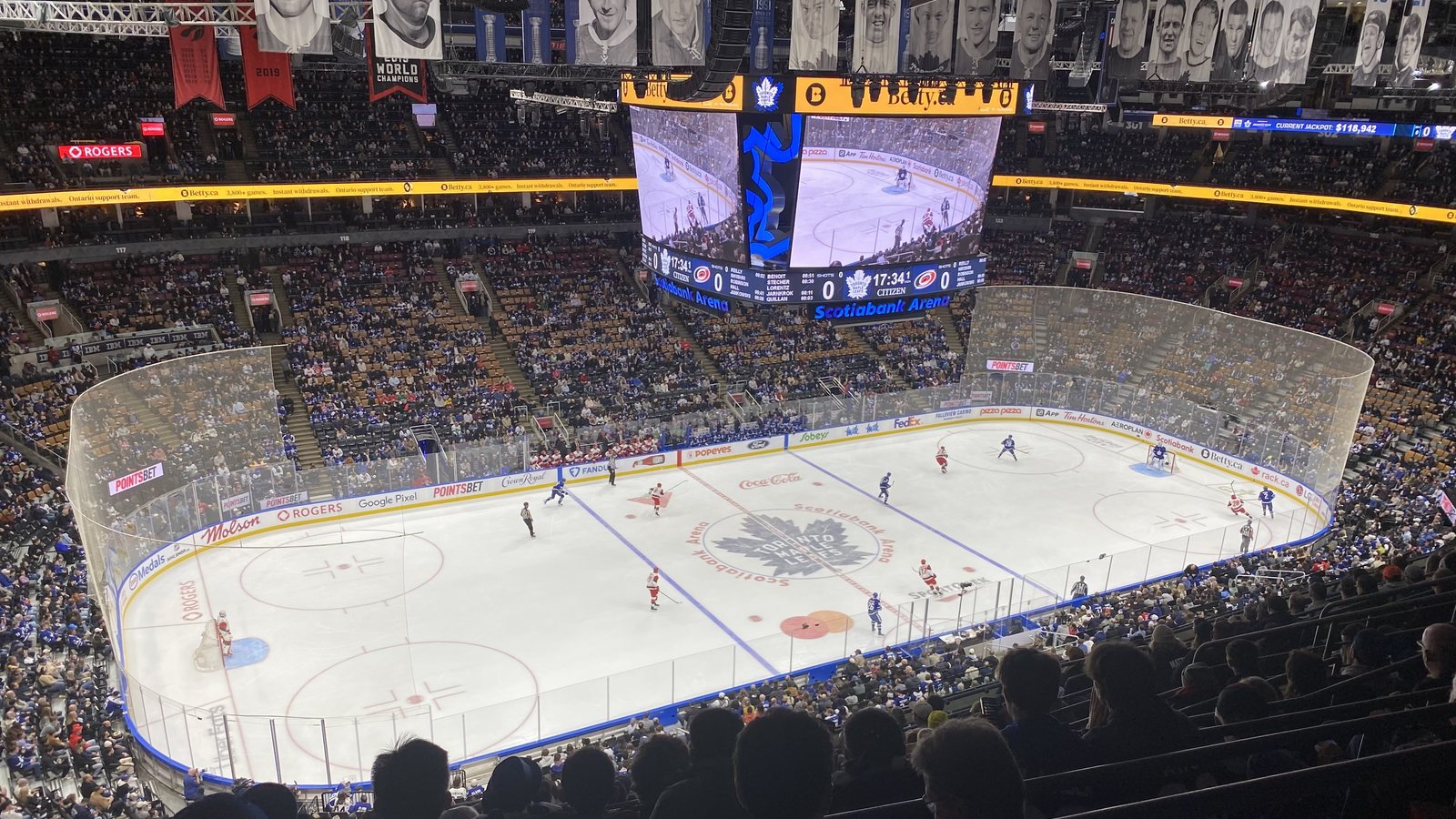
- Each prompt asks a single question: goalie, rest, shots, lines and checklist.
- The starting goalie is confirmed late: if he changes, the analysis is done again.
- The “60 minutes” market is not the same as the one that includes overtime and shootouts.
Save this article: the next hockey night, come back, copy the prompt you need and pick up where you left off.
Your progress is saved in this browser.
Which prompts work for betting on the NHL?
Ice hockey is a low-scoring sport with close games.
One rebound or one save changes the result.
If you ask an AI “analyze the game for me”, it tends to look at the standings and forget the goalie.
That is why this article splits the analysis into five prompts.
Each one asks a single question.
You put the answers together and draw your own conclusions.
All the prompts use parameters in [BRACKETS].
Replace each one with your own data before you paste.
If you leave a bracket unfilled, the AI fills it with whatever comes to mind.
Golden rule: the starting goalie is confirmed late, often on the same day.
And the “60 minutes” market is not the same as the one that includes overtime and shootouts.
In every prompt we ask for a source and for it to write “I don’t know” when it cannot verify.
This article does not explain hockey from scratch.
For that there is the guide to AI for NHL betting, with the season and the playoffs.
And if you are looking for prompts for another market, see the index of ChatGPT prompts for every betting market.
Before you paste: three rules so the AI answers better
- Turn on web search: without it, the AI does not know who is in goal today or who played last night.
- Paste the lines and the odds: you see them at your bookmaker, the AI does not.
- Say which market you are looking at: tell it whether it includes overtime and shootouts or is regulation time only.
Features change: check in the app what your plan includes.
No AI bets for you or knows the result.
All of them can make up a goalie’s statistic and write it with complete confidence.
Prompt 1: confirmed starting goalie and his form
This is the starter prompt and the most important one.
Each team has two goalies and the level between one and the other can be very different.
The game’s line moves when it is confirmed who is in goal.
For the [HOME TEAM] vs [AWAY TEAM] game on [DATE] in the NHL: tell me which goalie starts for each team and whether he is confirmed or only the probable starter.
For each goalie give me: games played, save percentage and goals against per game this season, and his last [N] starts.
State the date and time of the source that confirms the starter.
If he is not confirmed yet or you cannot verify him, write “I don’t know”.
What it returns
A sheet for each goalie with his season numbers.
And one key fact: whether he is the confirmed starter or only the probable one.
If it says “probable”, your analysis is still a draft.
How to verify it
Look for the announcement from the team or from a reporter who covers the morning skate.
Check two of the goalie’s numbers on the league’s official site.
Look again close to puck drop: if the goalie changed, repeat the prompt.
Watch out for a backup goalie who has played few games.
His save percentage can look very high or very low because of three or four nights.
That is why the prompt asks for games played alongside each number.
Prompt 2: back-to-backs and travel
The NHL schedule is tight.
There are games on consecutive nights and long road trips.
This prompt checks each team’s rest and gives you a clue about the goalie.
For [HOME TEAM] and [AWAY TEAM], tell me how many games each one played in the last [N] days and how many days of rest it has before [DATE].
State whether either one plays the second night of a back-to-back, whether it traveled between cities and which goalie played in its previous game.
If you cite how each team has done in that situation this season, add the number of games and the source.
If the sample is small, say so.
If you cannot verify a piece of data, write “I don’t know”.
What it returns
A summary of each team’s rest and travel.
Also who was in goal the night before.
If the starter played yesterday, the backup is more likely to play today, but it is not a rule.
How to verify it
Build the schedule yourself from each team’s official calendar.
Count the days of rest by hand.
Distrust any percentage based on five or six games.
We studied the effect of consecutive nights in basketball, in the article on back-to-backs in the NBA.
The idea is the same and so are the limits: it is one more factor, not a betting signal.
Prompt 3: shots for and against and the power play
In a low-scoring sport, shots on goal say more than the score.
They show who creates more danger game after game.
The power play adds another piece: what happens when a player is in the penalty box.
For [HOME TEAM] and [AWAY TEAM] in the [SEASON] NHL season, give me per game: shots on goal for, shots on goal against, goals for and goals against.
Add each team’s power-play percentage and penalty-kill percentage.
Tell me how many penalties per game each one takes.
State the number of games behind each average and the source.
If you cannot verify a piece of data, write “I don’t know”.
What it returns
A profile of each team: how much it shoots, how much it faces and how it plays a man up or a man down.
It helps you read the goal total with more than the goals average.
It does not tell you who wins.
How to verify it
Team statistics are on the league’s official site.
Check two numbers for each team.
If the games played do not match the current date, the AI used data from another season.
Prompt 4: moneyline, puck line and total against the implied probability
This prompt does not look for a winner.
It sorts out the markets and compares their prices.
The first thing it does is clarify what each one includes.
The market offers for [HOME TEAM] vs [AWAY TEAM]: moneyline at odds of [HOME ODDS] and [AWAY ODDS], puck line [PUCK LINE] at odds of [PUCK LINE ODDS] and a goals total of [TOTAL LINE], with the over at odds of [OVER ODDS] and the under at odds of [UNDER ODDS].
According to my bookmaker, [PASTE THE RULE: WHETHER EACH MARKET INCLUDES OVERTIME AND SHOOTOUTS OR IS REGULATION TIME ONLY].
Explain what has to happen for each bet to win under that rule.
Calculate the implied probability of each set of odds, step by step.
Do not assume the rule if I did not give it to you, and mark which part of your answer is calculation and which part is opinion.
What it returns
An explanation of what each bet needs in order to win.
And the implied probability of each set of odds.
With that you compare the markets with each other and with your own estimate.
How to verify it
Read the market rule at your bookmaker, not in the AI’s answer.
Redo the calculations with the odds converter and the expected value calculator.
The base calculation is in the article on implied probability: 1 divided by the odds.
| Market (example) | What it includes | Odds | Implied prob. |
|---|---|---|---|
| Moneyline, home | Overtime and shootouts | 1.80 | 55.6% |
| Home wins in 60 minutes | Regulation time only, a draw is possible | 2.40 | 41.7% |
| Puck line −1.5, home | Winning by two or more goals | 2.90 | 34.5% |
| Total 5.5, over | According to your bookmaker’s rule | 1.95 | 51.3% |
The numbers in the table are an example to show the calculation.
The same team has three different prices, because each market asks something different of it.
Winning in 60 minutes is harder than winning the game: that is why it pays more.
Before you bet, answer a single question: what happens to my bet if the game ends tied in regulation?
If you do not know, you have not understood the market yet.
The answer is in your bookmaker’s rules.
Prompt 5: the checklist before betting on hockey
This is the closing prompt.
It does not analyze the game: it reviews your analysis.
You ask it to look for gaps before you put money down.
This is my analysis of [HOME TEAM] vs [AWAY TEAM] on [DATE] in the NHL: [PASTE YOUR DATA AND CONCLUSIONS].
Act as a critical reviewer.
Tell me: 1) which piece of data is not verified, 2) whether the starting goalie is confirmed or only probable, 3) whether I am clear that the market does or does not include overtime and shootouts, 4) what information is missing (injuries, rest, travel) and 5) what bias I may have.
Do not give me a betting verdict.
Just flag risks.
What it returns
A list of gaps and risks.
It is the most useful prompt for stopping an impulsive bet.
If the list is long, maybe the best thing is to skip the game.
How to verify it
Tick off each risk you resolved.
If the goalie item stays open, wait until it is confirmed.
A good analysis can also end in not betting.
How to use the 5 prompts in order: step by step
Common mistakes when using AI for hockey
- Treating a goalie who is only listed as probable as confirmed.
- Betting “60 minutes” believing overtime counts.
- Judging a backup goalie by three or four games.
- Reading a short scoring streak as if it were a trend.
- Accepting a number without a source because it is well written.
The prompts help you think in an orderly way.
They do not replace the official announcement or your bookmaker’s rules.
Treat them as a notebook, not as an oracle.
What Gambeta does with the NHL, no promises
Gambeta publishes hockey predictions with its own model.
Each one is recorded with its odds before the game.
You can review it afterwards in the public record, win or lose.
Tonight’s are in today’s NHL predictions.
And the base of everything is the guide to AI for sports betting, with free predictions from Gambeta’s AI every day.
A prediction is not a promise, and no hockey bet is safe.
For adults 18 and over only.
Bet only money you can afford to lose, set a limit before you start and stop if you stop enjoying it.
More at responsible betting.
What to read next
The series continues with the other US leagues.
In the 5 prompts for MLB betting, the starting pitcher takes the goalie’s place.
In the 5 prompts for NFL betting, everything starts with the injury report.
For basketball there are the 5 prompts to analyze NBA games.
And for the rest of the markets, go back to the index of betting prompts by market.
Frequently asked questions
Which prompt should I use to bet on hockey?
Start with the starting goalie prompt, which is the fact that weighs the most.
Then add the back-to-backs and travel prompt and the shots prompt.
Always finish with the checklist.
Does ChatGPT know which goalie plays today?
Only if it searches the internet, and often the information does not exist yet.
The starting goalie is usually confirmed on the day of the game.
If the AI states it as fact without a source from that day, distrust it.
Does the NHL moneyline include overtime?
Usually yes: it pays the team that wins the game, with overtime and shootouts included.
The “60 minutes” market is a different one and has three options, with a draw.
Always read the market rule at your bookmaker.
What is the puck line?
It is hockey’s handicap.
The most common line is 1.5 goals: the favorite has to win by two or more.
It pays more than the moneyline because it is harder to hit.
Does playing two nights in a row matter?
It can matter, especially to know which goalie plays.
On the second night many teams start the backup goalie.
The effect is not fixed: ask for the sample of games and distrust it if it is small.
Does a good prompt guarantee I will win at NHL betting?
No.
No AI knows the result or bets for you.
A prompt organizes the data, but betting always carries the risk of losing money.