- A real bot goes from data to probability, compares it with the odds and publishes with a timestamp before the match.
- Before you trust it, demand four things: publication time, odds at publication, confidence and a record with the losses.
- Test it for 7 days with a spreadsheet and a fixed example stake: at the end look at the yield and whether it published everything, not the streak.
Save this guide and come back every day of the test: the steps stay ticked and on day 7 you will have the full answer.
Your progress is saved in this browser.
What is a free AI prediction bot, really?
The word “bot” gets used for anything.
A Telegram channel that sends three “sure things” a day calls itself a bot.
An Instagram account with screenshots of winning tickets calls itself a bot.
Neither of them is one.
A real prediction bot always follows the same chain.
First it takes in data: results, injuries, fixtures, odds from several bookmakers.
Then a model turns that data into a probability for every possible outcome.
Next it compares that probability with the odds the bookmaker pays.
If the odds pay more than the model expects, it publishes the pick with time, odds and a confidence level.
If there is no difference, it publishes nothing.
That last part is what separates a bot from a seller of smoke.
A bot can stay silent for a whole day because it found nothing.
A “sure things” channel never stays silent, because it lives off sending.
| Question | Real bot | “Sure things” channel |
|---|---|---|
| Where does the pick come from? | Data and a model | An opinion or nothing |
| Does it state the probability? | Yes, as confidence or % | It says “sure” or “banker” |
| Does it show the odds at publication? | Yes, with a timestamp | Sometimes, afterwards |
| Does it publish the losses? | Yes, they stay forever | It deletes them |
| Can it skip a day? | Yes, if there is no value | Never |
18+ only.
No bot, free or paid, can predict a match with certainty.
Bet only what you can afford to lose.
What does a serious bot show before the match?
You do not need to understand the model to judge it.
It is enough to look at what it publishes before the match starts.
There are four things, and all four have to be there.
- The publication time. A pick without a visible timestamp cannot be checked against the kick-off.
- The odds at publication. That is the price the bot made its decision at, and the one you will compare later.
- The probability or the confidence. It can be a percentage or a star scale, but it has to exist.
- The record with the losses. If you only see wins, you are not looking at a record, you are looking at advertising.
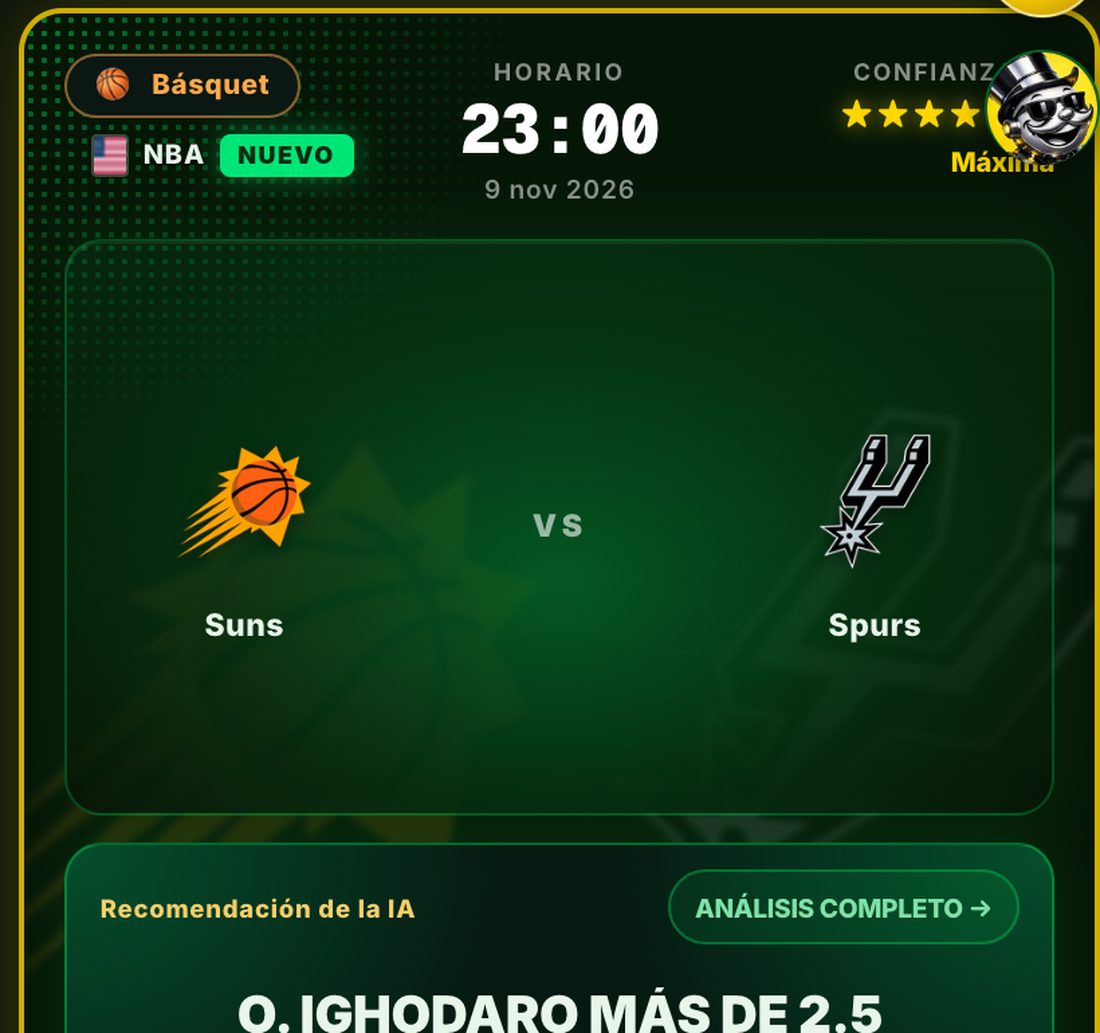
Look at the screenshot above.
The NEW label shows the pick has just come out.
The time and the date say when the game starts.
The stars and the word “Maximum” are the model's confidence.
All of that is in plain sight before the first play.
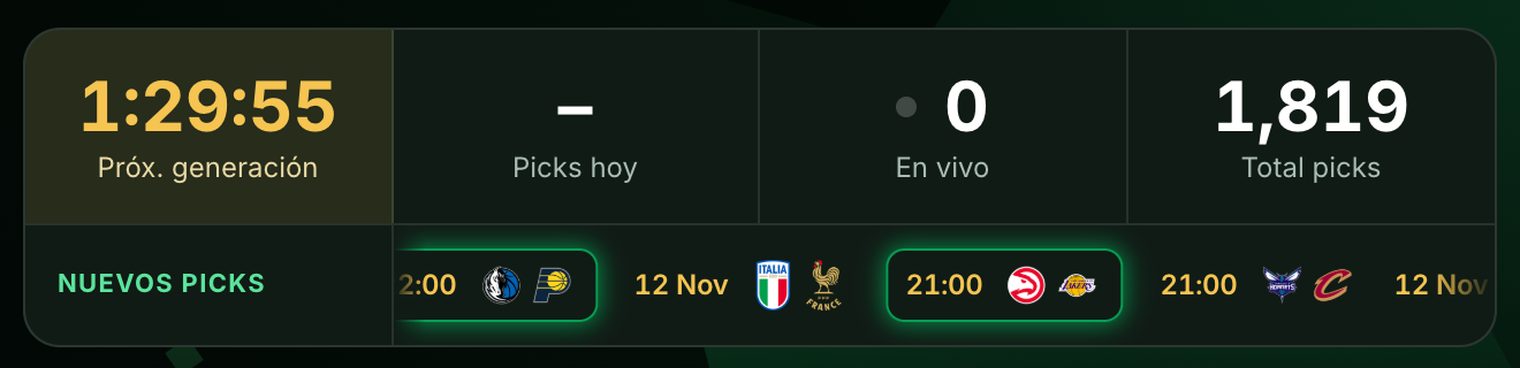
The second screenshot shows something a “sure things” channel never gives you: a countdown.
“Next generation” says how long until the next batch of picks.
That means the bot runs at fixed times, not whenever someone feels like it.
At the time of writing, the “Total picks” counter showed 1,819 published picks.
How do you test a free prediction bot in 7 days?
This protocol needs no real money.
You use a fixed example stake, say 10 units, and log everything in a spreadsheet.
If you want one ready to go, the Excel template for tracking your bets works as it is.
What matters is logging the odds at the moment the bot publishes, not afterwards.
What does the spreadsheet look like after the 7 days?
This is an example spreadsheet, with odds and results that are made up but consistent.
The fixed stake is 10 units per pick.
The balance is calculated with code, so you can copy the math.
| Day (example) | Odds at publication | Result | Profit / loss | Balance |
|---|---|---|---|---|
| Day 1 | 1.85 | Won | +8.5 | +8.5 |
| Day 2 | 2.10 | Lost | −10.0 | −1.5 |
| Day 3 | 1.70 | Won | +7.0 | +5.5 |
| Day 4 | 2.40 | Lost | −10.0 | −4.5 |
| Day 5 | 1.95 | Won | +9.5 | +5.0 |
| Day 6 | 1.60 | Lost | −10.0 | −5.0 |
| Day 7 | 2.05 | Won | +10.5 | +5.5 |
In this example the bot hit 4 of 7 picks, 57%.
It staked 70 units in total and closed with a balance of +5.5 units.
The yield is 5.5 divided by 70, that is 7.9%.
Notice that the balance went negative twice before closing in the black.
On day 7 do not look at the streak.
Three losses in a row across seven picks are normal, as the article on how many losing streaks are normal explains.
Look at three things.
First, the yield with the odds you logged, not the ones the bot claims.
Second, whether the bot published EVERY pick you logged, losses included.
Third, whether any odds in the record changed from what you saw at publication.
Seven days are enough to catch a dishonest bot.
They are not enough to confirm a good one.
That takes hundreds of picks, and that is why the fixed stake matters so much: the article on fixed vs variable stake explains why.

How do you follow Gambeta's bot for free?
Gambeta's bot publishes its picks for free in two places.
On the website, the home page shows today's picks with time, odds, confidence and the full analysis of each one.
The public record keeps every pick with its result, losses included.
If you want to understand the model end to end, the guide to AI for betting explains it without jargon.
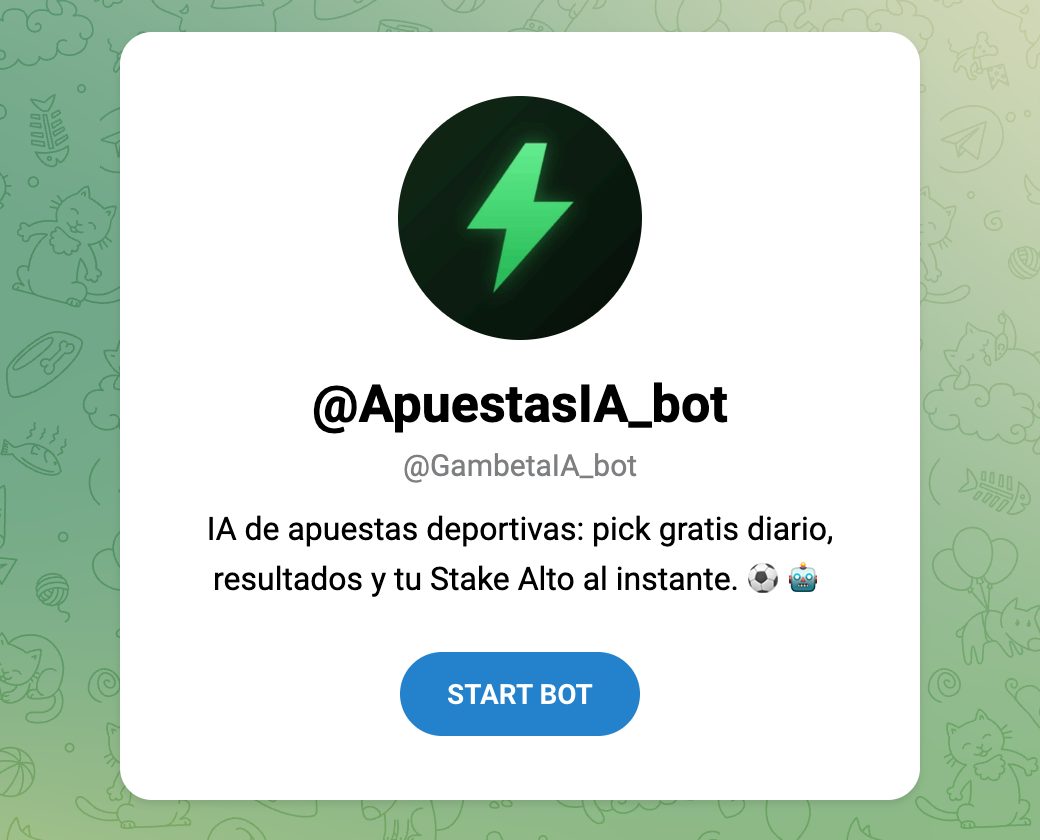
The second place is Telegram.
The bot @GambetaIA_bot sends one free pick a day and then the result.
It is handy for running the 7-day test without opening the website.
What else the bot does and how to set it up is explained in the article on the Telegram betting bot.
One clarification about what the bot does NOT do.
It does not give correct scores, because the article on correct score prediction with AI shows why that market almost never has value.
And it promises nothing: every pick carries a confidence level, not a guarantee.
What are the 5 signs of a bot that is just smoke?
A single one of these signs is reason enough to cut the test short.
They are the ones that show up again and again in channels that call themselves bots without being one.
- It asks for payment before showing the record. A real bot lets you see what it did before asking you for anything.
- It deletes the losses. If yesterday's pick has disappeared, the record is worthless.
- It promises 100% or “sure things”. No model has that certainty, and whoever sells it knows that.
- It changes the odds afterwards. Odds of 1.70 that show up as 2.10 the next day are an edit, not a pick.
- It shows edited screenshots. Tickets with no time, no bookmaker or cropped numbers prove nothing.
The same signs work for any prediction site, not just bots.
If you want the full check for a website, read how to recognise a reliable prediction site.
What if you would rather build your own bot?
After testing someone else's, many people want their own.
You can start without knowing how to code.
The article on building your own betting bot with parameters explains which rules to define and what data you need.
If what you want is an alert when odds move, the guide to building your own betting alerts software goes that way.
Someone else's or your own, a bot is judged the same way.
Time, odds, confidence and a record with the losses.
If it meets all four, the 7-day test tells you the rest.
Frequently asked questions
What is a free AI prediction bot?
It is a model that turns match data into a probability and compares it with the odds.
If it finds a difference in its favour, it publishes the pick with time, odds and a confidence level.
A channel that sends “sure things” with no time and no record is not a bot, whatever it calls itself.
Is there a free prediction bot that is reliable?
There are bots that publish for free and show everything you need to check them.
Reliable does not mean it always wins: it means you can verify every pick before and after the match.
Gambeta's bot publishes its picks for free on the website and on Telegram, with a public record.
How do I test a prediction bot in 7 days?
Each day log the date, the pick, the odds at publication and a fixed example stake.
When the match ends, log the result and the profit or loss.
On day 7 add up the balance, work out the yield and check that the bot published every pick, losses included.
Are seven days enough to know if a bot wins?
No, seven days are enough to know if the bot is honest, not if it is profitable.
With 7 picks, a run of 5 wins or 5 losses is normal and says nothing about the model.
To judge profitability you need hundreds of picks and a public record.
What is yield and why does it matter more than the hit rate?
Yield is net profit divided by the total amount staked.
A bot can hit 60% at low odds and lose money.
Another can hit 45% at high odds and win.
Is it safe to follow a free prediction bot?
Only with a fixed budget you can afford to lose and odds you have checked yourself.
No bot guarantees wins, and any that promises them is smoke.
Treat every pick as an estimate and stop when you reach your limit.
🌍 GLOBALFrom any country · Telegram with a translator into your language
📲 The AI's picks, free on your phone
Every new pick arrives the moment it's made, with a link to its analysis. Choose where to get it:
How each one works: Free AI betting channel on Telegram · Free WhatsApp betting tips channel · Betting channel: Telegram or WhatsApp?