
- What it is: splitting your stake across several outcomes so you collect the same if any of the covered ones wins.
- Risk: if an uncovered outcome happens you lose everything; and if you cover them all, you pay the bookmaker's margin.
- Different from a surebet: a surebet covers every outcome, with the sum of inverse odds below 1.
What is dutching?
Dutching is splitting your money across several selections in the same event.
You choose how many outcomes to cover and split the stake so you collect the same if any of them wins.
The technique became popular in horse racing.
The idea is simple.
Instead of putting everything on one outcome, you bet on two or more.
Each with a different stake, calculated to equalize the payout.
It is not a strategy for winning every time.
It is a way to cover more outcomes with the same budget.
If an outcome you did not cover happens, you lose everything.
The numbers are examples with made-up data.
Dutching does not eliminate risk: it changes how it is spread.
Betting is for adults 18 and over only and can lead to losses.


How it works: an example with two outcomes
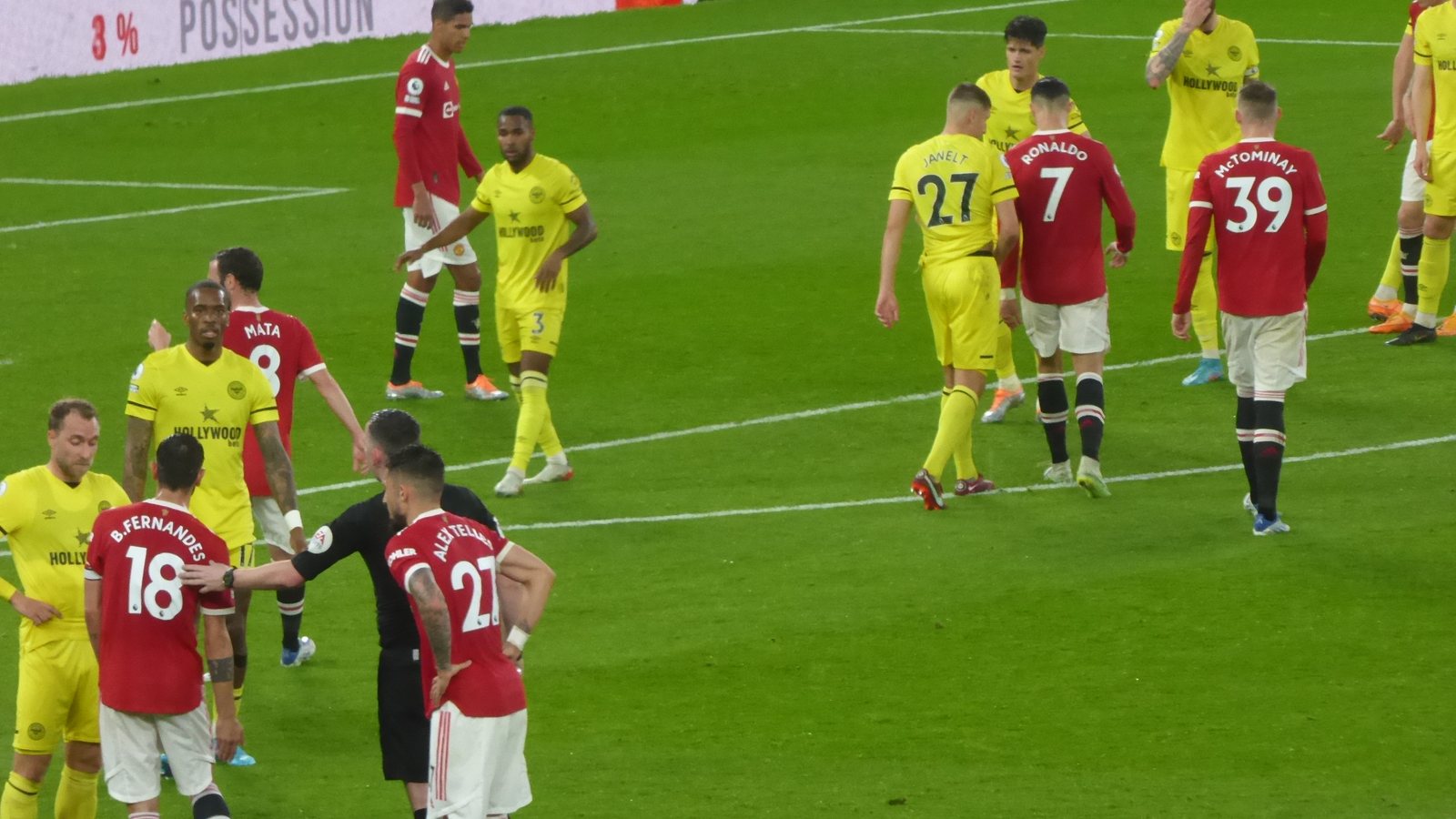
Take a match between Manchester United and a Premier League opponent.
You want to cover two of the three outcomes: a home win and a draw.
The example odds are 2.10 and 3.40.
| Selection (example) | Odds | Stake | If it wins, you collect | Net |
|---|---|---|---|---|
| Manchester United to win | 2.10 | 61.82 | 129.82 | +29.82 |
| Draw | 3.40 | 38.18 | 129.82 | +29.82 |
| Away win (not covered) | — | 0 | 0 | -100.00 |
The total stake is 100.
If either of the two covered outcomes wins, you collect 129.82.
Your profit is 29.82 in both cases.
But if the away team wins, you lose the 100.
That is the cost of covering only two outcomes.
Dutching does not protect you from what you left out.
The full calculation is in the dutching calculator, step by step.
Here we stick to the idea.
Why split unevenly instead of fifty-fifty
If you split 50 and 50, the payout changes depending on the outcome.
If the home team wins, you collect 105.
If it is a draw, you collect 170.
| Split (example) | If the home team wins | If it is a draw |
|---|---|---|
| 50 and 50 | +5.00 | +70.00 |
| 61.82 and 38.18 (dutching) | +29.82 | +29.82 |
Dutching equalizes the profit.
It does not chase the maximum on one outcome.
It aims for a payout that does not depend on which covered outcome happens.
When dutching helps
It helps in specific situations.
In all of them, the common thread is the same: you want to cover several plausible outcomes of one event.
- Markets with many outcomes: correct score, goalscorer, tournament winner.
- Two favorites among three options: covering home win and draw instead of betting only on the home win.
- Races and events with several participants: splitting between two or three contenders.
- When your analysis cannot separate two outcomes: you cover both.
The key is whether the probability you cover is worth it.
In the example, the sum of the implied probabilities is 77%.
It only pays off if you believe the real probability of those two outcomes is higher.
The break-even rule
The break-even point is the probability the covered set needs to have so you do not lose.
It equals the sum of the inverse odds.
In the example, 1/2.10 + 1/3.40 = 0.770.
That means that, to break even, those two outcomes would need to happen 77% of the time.
If you think they happen less often, the bet has negative expected value.
You can review the concept in implied probability.

When it does NOT make sense
- When the sum of the inverse odds is greater than 1 and there is no real edge.
- When you cover outcomes because you "do not want to lose", instead of analyzing.
- When the stakes come out so small that they get rounded and lose precision.
- When the bookmaker limits your account if you split bets systematically.
Dutching can make you feel that you have everything covered.
That is an illusion.
You only covered what you chose.
The hidden cost: margin and commission
Bookmakers build a margin into every price.
When you cover all the outcomes of a market, the sum of the inverse odds goes above 1.
That excess is the margin.
| 1X2 market (example) | Odds | 1 / odds |
|---|---|---|
| Home | 2.10 | 0.476 |
| Draw | 3.40 | 0.294 |
| Away | 3.60 | 0.278 |
| Sum | — | 1.048 |
The sum is 1.048.
If you bet all three outcomes with dutching, you collect 100 ÷ 1.048 = 95.41 for every 100 staked.
You lose 4.59 whichever outcome wins.
That is not a profit, it is the bookmaker's margin.
You can read more in what the bookmaker margin is.
That is why covering everything does not work: a loss is guaranteed.
On exchanges (peer-to-peer betting sites), they charge a commission on net winnings.
With an example commission of 2%, the 29.82 profit drops to 29.22.
You have to subtract it before deciding.
Bookmaker limits and practical problems
- Rounding: bookmakers accept stakes with few decimals. With 62 and 38, the payouts change to 130.20 and 129.20.
- Maximums and minimums: every market has its own stake cap.
- Odds changes: between one bet and the next, the price can move and throw the split off.
- Account limits: some bookmakers restrict people who split bets in a very systematic way.
That is why manual dutching has friction.
It pays to place the bets quickly and check the price before confirming.
If a price changes, you recalculate.
Dutching vs surebet: they are not the same
A surebet covers every outcome with odds from different bookmakers, and the sum of the inverses comes out below 1.
There the profit is the same whichever outcome wins.
It is a special and rare case.
Dutching covers only some outcomes.
It guarantees nothing if one you did not cover happens.
It is a splitting technique, not an arbitrage technique.
| Dutching | Surebet | |
|---|---|---|
| Covers | Some outcomes | All outcomes |
| If another one happens | You lose the stake | There is no other |
| Condition | Your analysis | Sum of inverses below 1 |
| Risk | Real | Operational (odds change) |
To go deeper, read about surebets and sports trading.
How to do dutching in 5 steps
The full formula and the examples are in the dutching calculator.
Questions to ask before using dutching
Before you start, ask yourself three questions.
If any answer is "no", it is better not to do it.
- Does my analysis say those covered outcomes have a higher probability than the sum of the inverses?
- Do I accept losing the whole stake if the outcome I left out happens?
- Is it an amount I can lose without affecting my living expenses?
What to read next
The natural next step is the dutching calculator, step by step.
It has the formula, examples with two and three selections and a check of every calculation.
To keep track of what you bet, use the Excel template.
To see how the value of a price is calculated, there is the expected value calculator.
The background guide is AI for betting: the complete guide.
Calculate the expected value of your bet
Frequently asked questions
What is dutching in betting?
It is splitting your stake across several outcomes of the same event.
The amounts are calculated so the payout is equal if any of the covered outcomes wins.
It does not cover the outcomes you left out.
Does dutching eliminate risk?
No.
If an outcome you did not cover happens, you lose the whole stake.
It only changes how the risk is spread across the outcomes.
What is the difference between dutching and a surebet?
A surebet covers every outcome and the sum of the inverse odds is below 1.
Dutching covers some and does not guarantee a profit.
They are different techniques, even though the math is similar.
When does dutching make sense?
When you want to cover two or more plausible outcomes of the same event.
It is common in correct score, goalscorer and tournament outright markets with several contenders.
It only makes sense if your analysis says the covered outcomes are more likely than the sum of the inverses.
What happens if I cover every outcome with dutching?
You lose the bookmaker's margin whichever outcome wins.
If the sum of the inverses is 1.048, you collect 95.41 for every 100 staked.
That is not a profit, it is a cost.
Do bookmakers limit people who use dutching?
Some restrict accounts with very systematic patterns.
There are also stake caps, rounding and odds changes.
That is why it pays to place the bets quickly and check every price.