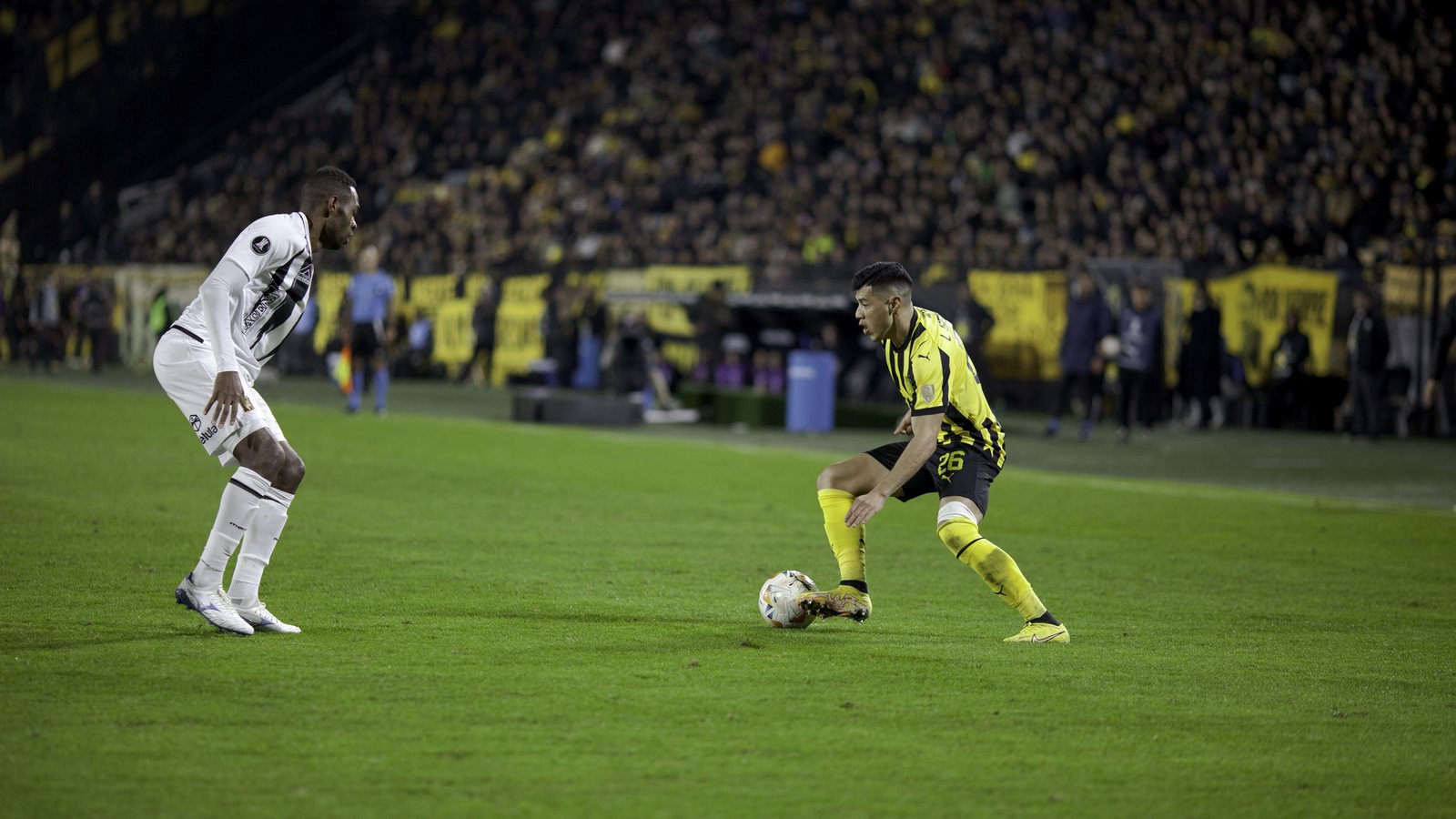
- Each prompt asks a single question: context, head-to-head, cards, home advantage and checklist.
- The head-to-head record of a derby is a small sample: ask for a source and do not use it on its own.
- A prompt organizes your derby analysis, it does not pick the bet and it does not guarantee a result.
Save this article: the next time there is a clásico on the calendar, come back, copy the prompt you need and pick up where you left off.
Your progress is saved in this browser.
Which prompts work for betting on derbies and clásicos?
A derby feels different from an ordinary match.
There is rivalry, pressure from the stands and a lot of noise before kickoff.
If you ask an AI “analyze the clásico for me”, the answer comes out full of clichés.
That is why this article splits the analysis into five prompts.
Each one asks a single question.
You put the answers together and draw your own conclusions.
All the prompts use parameters in [BRACKETS].
Replace each one with your own data before you paste.
If you leave a bracket unfilled, the AI fills it with whatever comes to mind.
Golden rule: in a derby there are plenty of stories and too few verifiable facts.
In every prompt we ask for a source and for it to write “I don’t know” when it cannot verify something.
Even so, open every source yourself before you bet.
If you have not built your analysis base yet, start with the match context prompts.
And if you are looking for a prompt for another market, there is the index of ChatGPT prompts for every betting market.
Before you paste: three rules so the AI answers better
- Turn on web search: without it, the AI does not have this season’s results.
- Paste the odds and the build-up articles: you see them, the AI does not.
- State the competition: a league derby and a cup derby are not read the same way.
Features change: check in the app what your plan includes.
No AI bets for you or knows the result.
All of them can make up data, which is why we verify.
Prompt 1: context and the motivation behind the rivalry
This is the starter prompt.
It looks for what each team is playing for besides the three points.
The key is to separate facts from the stories commentators repeat.
Analyze the context of [HOME TEAM] vs [AWAY TEAM] on [DATE] in [COMPETITION].
Tell me each team’s position in the table, what each one is playing for and how many points separate them.
List confirmed absences and doubts, with a source.
Separate verifiable facts from press opinion.
If you cannot verify a piece of data, write “I don’t know”.
What it returns
A sheet with the situation of each team.
It includes what is at stake and the confirmed absences.
It is the base for the other four prompts.
How to verify it
Open the standings table and check the points gap.
Cross-check the absences against each club’s official website.
If the AI only cites “media”, ask for the link or discard the data.
To go deeper on absences, use the injury and absence prompts.
Prompt 2: head-to-head record with a small sample
The history between two rivals is the most quoted thing and the least measured.
This prompt brings it in with the number of matches in plain sight.
That way you see whether there is something there or just an anecdote.
Give me the last [N] matches between [HOME TEAM] and [AWAY TEAM] in [COMPETITION].
For each one: date, result, who was the home team and cards shown.
State how many of those matches were played with the same manager on both sides.
Say how many matches the sample has and the source.
Do not draw conclusions, just organize the data.
What it returns
A list of matches with the result and who played at home.
It shows you how much each squad has changed since then.
It does not predict anything: it only organizes what happened.
How to verify it
Compare two results with a statistics source.
Check that the dates and competitions match.
If there are fewer than ten matches, treat it as context and not as a trend.
Why a small sample misleads is explained in the article on how many bets you need before drawing conclusions.

Prompt 3: cards and the tension of the match
A derby usually feels hotter.
If that shows up in the cards, you have to check it with numbers.
This prompt compares derbies with the rest of the season.
For [HOME TEAM] vs [AWAY TEAM] on [DATE], give me the yellow and red cards per match of each team this season.
Compare them with their cards in the last [N] meetings between them.
Tell me who the appointed referee is and his average cards per match, with the source.
The cards line is [LINE], with the over at odds of [OVER ODDS] and the under at odds of [UNDER ODDS].
Calculate the implied probability of each set of odds, step by step.
What it returns
Cards per match overall and in derbies, plus the referee’s profile.
Also the implied probability of each set of odds.
With that you see whether the line reflects the tension that is expected.
How to verify it
Redo the calculations with the odds converter and the expected value calculator.
Open the referee’s profile and check his average.
If your calculation and the AI’s do not match, yours is the one that counts.
| Data (example) | In derbies | In the rest | Reading |
|---|---|---|---|
| Cards per match | 5.5 (from 6 matches) | 4.2 (from 30 matches) | A gap, small sample |
| Over odds | 1.85 | 1.85 | Implied prob.: 54.1% |
| Under odds | 2.00 | 2.00 | Implied prob.: 50.0% |
The numbers in the table are an example to show the calculation.
Six matches are a small sample.
A gap in favor on paper can be just noise.
For the whole market, see the yellow card betting prompts and the article on how referees influence cards.
Prompt 4: home advantage and pressure from the stands
People often say the home team performs differently in a derby.
It may be true or it may not.
This prompt compares home performance with that in derbies.
Give me the home performance of [HOME TEAM] this season: matches, points per match, goals for and goals against.
Do the same for [AWAY TEAM] away from home.
Compare it with the performance of both in their last [N] derbies or clásicos.
State the number of matches behind each figure and the source.
Do not assume the effect of the crowd: if there is no data, write “I don’t know”.
What it returns
A comparison between normal performance and performance in derbies.
It tells you whether home advantage weighs more or less in these matches.
It does not measure the pressure, only its effects on results.
How to verify it
Add up by hand the points from the matches it lists.
Check that the derbies are all from the same competition.
If the home effect only shows up in two or three matches, do not take it as a rule.
Prompt 5: the checklist before betting on a derby
This is the closing prompt.
It does not analyze the match: it reviews your analysis.
You ask it to look for gaps before you put money down.
This is my analysis of the derby [HOME TEAM] vs [AWAY TEAM] on [DATE]: [PASTE YOUR DATA AND CONCLUSIONS].
Act as a critical reviewer.
Tell me: 1) which piece of data is not verified, 2) whether the sample of derbies is small, 3) what information is missing (absences, referee, build-up mood) and 4) what bias I may have, for example betting on the team I like.
Do not give me a betting verdict.
Just flag risks.
What it returns
A list of gaps and risks.
It is the most useful prompt for stopping an impulsive bet.
In a clásico, betting with your heart is the most common bias.
How to verify it
Tick off each risk you resolved.
The ones you cannot resolve stay as a reason to skip the match.
A good analysis can also end in not betting.
How to use the 5 prompts in order: step by step
The limits of these prompts
- The AI does not see the odds or the mood in the build-up unless you paste them in.
- It may give results from another season or another competition.
- Derbies have few matches in the sample: a trend can be chance.
- A clásico surprises more often than people think.
- A well-written answer is not a true answer.
The prompts help you think in an orderly way.
They do not replace a data source or a record of results.
Treat them as a notebook, not as an oracle.
What Gambeta does with the big matches, no promises
Gambeta publishes predictions with its own model.
Each one is recorded with its odds before the match.
You can review it afterwards in the public record, win or lose.
If you want to see how it works, go to the guide to free AI for sports betting, with free predictions every day.
A prediction is not a promise.
No bet on a clásico is safe.
For adults 18 and over only.
Bet only money you can afford to lose, set a limit before you start and stop if you stop enjoying it.
More at responsible betting.
What to read next
If the big match is a knockout tie, the logic changes.
It has its own rules: prompts for two-legged ties and finals.
To keep your own decisions in check, see the betting discipline prompts.
And for the rest of the markets, go back to the index of betting prompts by market.
Frequently asked questions
Which prompt should I use to bet on a derby?
Start with the one for context and rivalry: it tells you what each team is playing for.
Then add the cards prompt and the home advantage one.
Always finish with the checklist.
Are there no favorites in derbies?
It is a common myth, and it is better to measure it than to believe it.
Ask the AI for the results of recent derbies and compare them with what happened in the rest of the matches.
If the sample is small, do not conclude anything.
Does the AI know the mood in the build-up?
No, unless you give it to the AI.
Tension, war of words and pressure from the stands do not show up in a table.
Paste in the articles you read and ask it not to assume anything else.
Does more rivalry mean more cards?
It can, but you have to check.
Ask for the cards per match in previous derbies and compare them with the league average.
The appointed referee also matters.
Is head-to-head history useful?
It helps little if there are few matches.
Teams, managers and players change from one season to the next.
Use it as context, not as your main argument.
Does a good prompt guarantee I will get a clásico right?
No.
Clásicos have a lot of variance and surprises.
A prompt organizes the data, but betting always carries the risk of losing money.